I spent 11 years working in a corporate environment at American Express. Today, my focus is bringing a disciplined approach to small businesses that need practical help within a realistic budget.
A local business does not need the structure or overheads of a large organisation to benefit from clear thinking. It needs someone who understands what matters, can explain the options and can turn an agreed decision into useful work.
That is the connection I want to make through First Search Digital: substantial experience and technical knowledge, applied at a scale that suits the business in front of me.
Start with a business purpose
A website, an advertising campaign or a new tool should have a reason to exist. Before discussing the technical details, I want to understand the customers you serve, the work you want more of and what currently gets in the way.
You know the business better than I do. My responsibility is to listen carefully enough to connect that knowledge with the digital decisions.
For a small company, that can mean being very selective. If your immediate need is better enquiries for one service, a large programme covering every channel may distract from the job that matters.
Bring discipline without unnecessary process
The principles I value are straightforward: agree the priority, understand the constraints, define the work and review the result. They do not require a lengthy presentation or a complicated reporting system.
A short plan can be enough if it explains what will be done, why it matters and what input is needed from you. Clear responsibilities help stop good intentions turning into half-finished work.
Being organised should make things easier for the owner. If the process takes more effort to manage than the work itself, it needs simplifying.
Technical knowledge is only useful if it can be explained
One of my key strengths is being able to understand technical detail and explain it clearly and logically to someone who does not work with it every day.
You should be able to ask why a change is recommended, what it will cost and what might happen if you leave it alone. The answer should help you make a decision, not leave you feeling that you have asked the wrong question.
I want you to understand enough to remain in control. That may mean a plain-English explanation, a demonstration using your own website or training so you can manage a routine task yourself.
Look at how the different parts affect each other
SEO, paid advertising, social media and the website do not operate independently from the customer’s point of view. Someone may hear your name, check your recent work, read a service page and only then contact you.
My broad skill set lets us consider those connections within one conversation. If the immediate issue is the landing page, it makes sense to fix that before spending more on clicks. If customers struggle to find the business, we can investigate discovery.
The benefit is practical continuity: the person explaining the recommendation can also help carry out the work.
Make the scope fit the budget
Small businesses need to know what they are committing to. I charge hourly and agree the plan at the beginning of the month around business needs, budget and available time.
That may include SEO, PPC, social media or website work, depending on the priority. A limited budget means being honest about how much can be completed and choosing the most useful starting point.
Affordability should come from a suitable scope and direct working relationship. It should not depend on promises that every business will achieve the same result.
Keep the relationship flexible
Priorities change. A business may need to pause while cash flow improves, take advantage of a new opportunity or spend a month addressing an operational problem.
I do not use minimum contract terms or notice periods. I believe in honesty, transparency and integrity, and in retaining clients through the quality of the work rather than tying them down.
That also means being prepared to say when I do not think a proposed activity will help. I only want to work with people I can actually help, and that begins with a realistic conversation about what they need.
Text version of the infographic: Big-business discipline. Small-business scale.
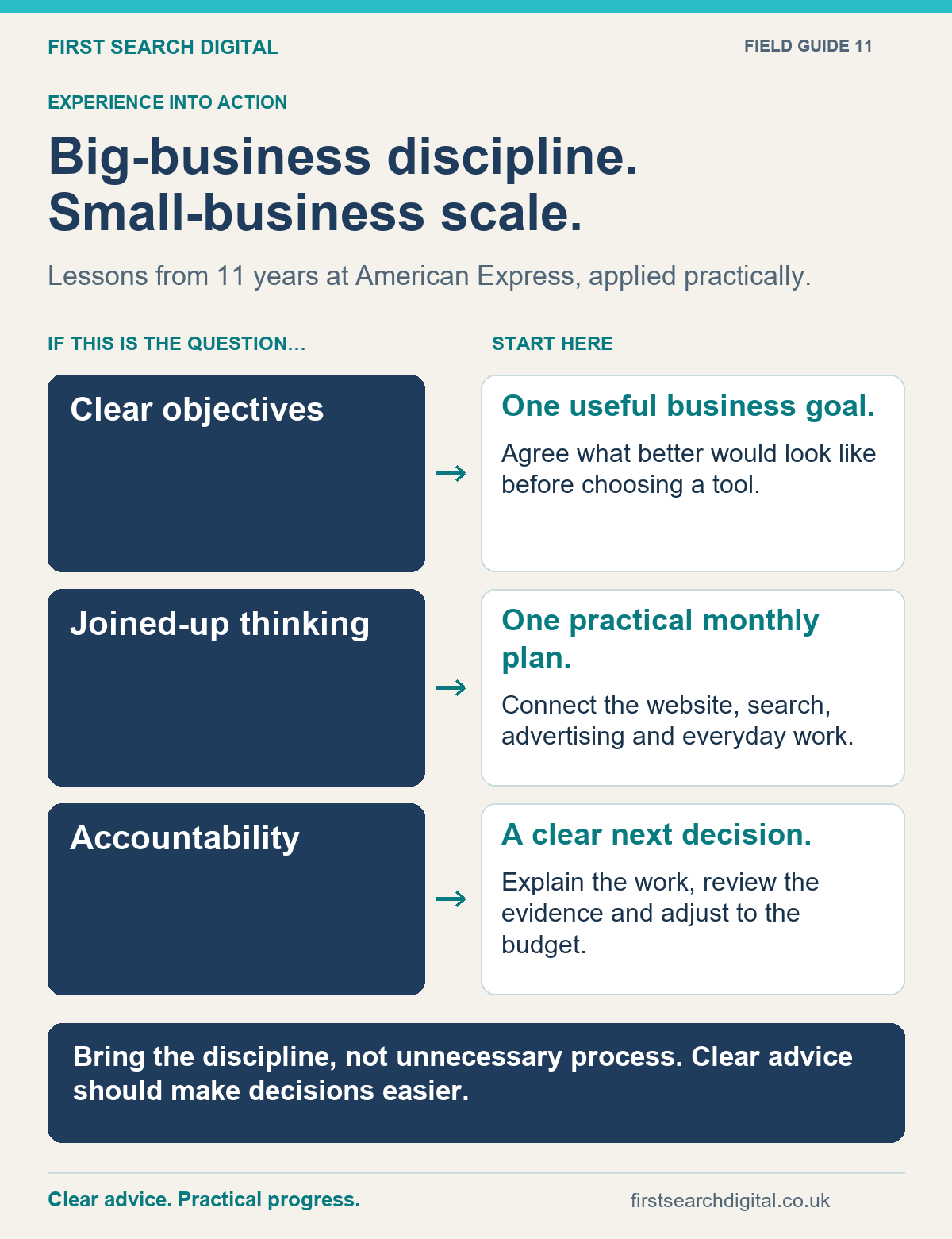
Big-business discipline. Small-business scale.
Lessons from 11 years at American Express, applied practically.
Clear objectives — One useful business goal. — Agree what better would look like before choosing a tool.
Joined-up thinking — One practical monthly plan. — Connect the website, search, advertising and everyday work.
Accountability — A clear next decision. — Explain the work, review the evidence and adjust to the budget.
Bring the discipline, not unnecessary process. Clear advice should make decisions easier.
What that means for working together
You bring the understanding of your customers and the business. I bring experience, technical knowledge and the ability to make the digital choices easier to understand and act on.
Read more about me, explore how we can work together or see previous client work. If that approach sounds useful, tell me what your business needs next.
This article reflects my own experience and approach. It does not imply endorsement by American Express.
Put this into practice
Explore digital business consultancy for help turning a business problem into an agreed plan. If you prefer to start yourself, the Website & SEO Health Check gives you a structured set of questions to work through.